Program features

Everything you need to live well with bipolar.

You build a personal picture of your environments, behaviors, comfort zones and tools, and that picture becomes a self-management system made for you. It works alongside your doctor and therapist, never in place of medication or therapy.

Core program

Six parts that work together.

Lessons

The lessons run in order, from 1.0 to 8.8, with video and reading in each. Built into them are short interactive exercises you complete before moving on. Those exercises build your personal profile: rating environments, naming behaviors, setting your comfort zones, choosing tools and setting up your timeline.

Daily check-ins

About 30 seconds a day to record where you are right now: your state, what is happening around you and how you are handling it. Over time those entries become a personal record that powers the AI coaching, the reports and the patterns the program finds.

Your comfort zone

You set your own thresholds for how far into each state you can go and still function. Every check-in shows whether you are inside your comfort zone, slightly outside it, or too far outside.

Seeing your behavior

Learn to see Dis-Ordered behavior coming and to shift on purpose into IN Order responses. The program follows how you act toward others and toward yourself, so you can spot patterns before they build.

Your environments

Your surroundings: where you are, who you are with, the atmosphere and what you are doing. In the exercises you rate how each one affects your mania and your depression separately, and the program follows them over time to find patterns. You can add your own environments to the built-in list.

Step-by-step access

Features open up as you move through the lessons. Daily check-ins come first, then tools, reports and the timeline. That keeps the start manageable and means you understand each feature by the time you reach it.
Tools for each state

Mania and depression, each on its own terms

Nearly everything comes in pairs. Mania and depression each have their own tools, environment ratings, timeline settings and comfort zone thresholds, because the two pull in opposite directions: what helps in depression can be the wrong move in mania, and the reverse is true too.

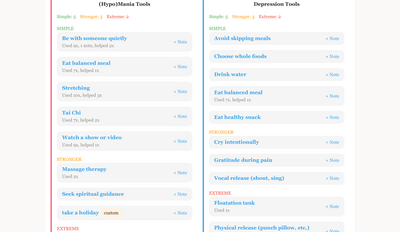
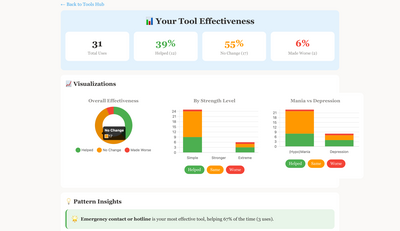
Tool effectiveness tracking

Tools you choose

The program gives you a library of tools sorted by strength, from simple everyday steps to stronger responses for more intense states. You choose the ones that work for you, see which ones keep you IN Order, and build your own toolbox as you go. Each day's check-in brings tool suggestions that fit your current state and comfort zone.

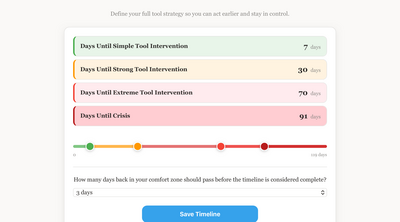
Timeline settings with graduated phases

A response in steps

If your check-ins show you moving outside your comfort zone, the program guides you through a response in steps: first noticing, then stronger tools only when you need them.

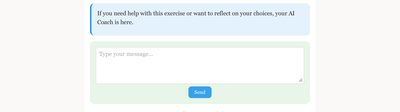
AI Coach interface

Your AI coach

An AI coach that helps you reflect, strengthens your self-awareness and helps you spot your patterns. It coaches; it does not give clinical advice.

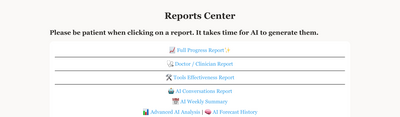
Reports Center with available report types

Reports, shared your way

Reports show how you are doing over time: mood trends, the tools that are working, behavior patterns and insights from the AI. You see your own data. Organizations that sponsor the program see combined results for their group, such as engagement, cost savings and tool effectiveness, but never anyone's individual check-ins or conversations.

You can share your check-ins, tool use, AI coaching conversations and reports with your therapist, doctor, family or researchers, and you set exactly what each person can see. Your therapist might see the clinical report and tools data while your spouse sees only the weekly summary. You stay in control and can take access away at any time. Every view is logged for HIPAA compliance.

Privacy and security

Made to protect health data.

Your data is protected by a HIPAA-compliant design: passwords stored with bcrypt hashing, two-factor sign-in (TOTP), rotating CSRF tokens, prepared database statements, limits on login attempts and Cloudflare Turnstile checks against bots. Configuration files sit outside the web root. Separate roles keep user, partner admin and system admin access apart, and every sign-in and every data access is recorded in an audit log.

Ready to begin?

Helping people with bipolar create better outcomes since 2003.

Join the Program →